One of the biggest misconceptions about SEO is that ranking #1 in Google automatically means success.
It doesn’t.
In fact, I’ve seen businesses rank #1 for dozens of keywords that generate virtually no leads, no phone calls, and no revenue.
At the same time, I’ve seen businesses rank #3 or #4 for highly targeted search terms and generate a steady stream of qualified leads every month.
The difference isn’t the ranking.
It’s the keyword.
The Goal of SEO Isn’t Rankings
If you’ve ever spoken with an SEO company, you’ve probably heard them talk about rankings.
“We got you to the first page.”
“We moved you up three positions.”
“You’re ranking for 150 keywords.”
Those metrics can be useful, but they don’t tell the whole story.
The real goal of SEO isn’t to rank.
The goal is to attract potential customers who are actively looking for the products or services you offer.
A ranking is only valuable if it puts your business in front of the right audience.
Not All Keywords Are Created Equal
Let’s look at a simple example.
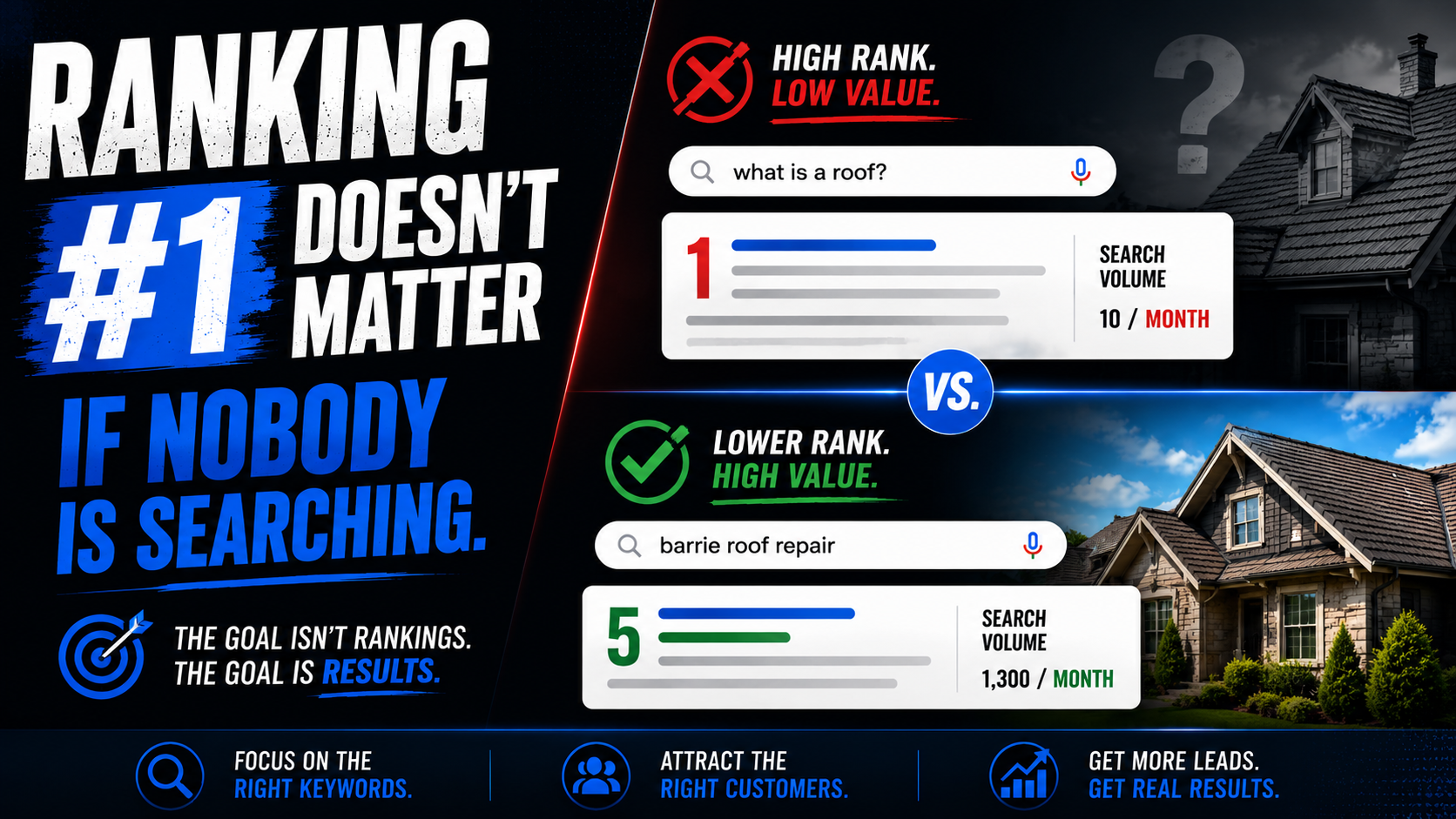
Imagine you’re a roofing contractor in Barrie.
Which ranking would you rather have?
Option A
#1 for:
“What Is a Roof?”
Option B
#5 for:
“Barrie Roof Repair”
Most business owners would choose Option B.
Why?
Because the person searching for “Barrie Roof Repair” is much closer to making a purchasing decision.
They’re not looking for information.
They’re looking for a solution.
That search has commercial intent.
And commercial intent is what generates leads.
Understanding Search Intent
One of the most important concepts in SEO is search intent.
Search intent refers to the reason behind a search.
Generally, searches fall into one of four categories:
Informational Searches
Examples:
- What is SEO?
- How does a furnace work?
- What causes roof leaks?
These searches are often used for research and education.
Navigational Searches
Examples:
- Facebook Login
- Home Depot Barrie
- Tim Hortons Hours
The user is looking for a specific website or business.
Commercial Searches
Examples:
- Best HVAC Company Barrie
- Barrie Personal Trainer
- Fence Contractor Newmarket
These users are comparing options and getting closer to a buying decision.
Transactional Searches
Examples:
- Emergency Plumber Barrie
- Roof Repair Near Me
- Book SEO Consultation
These searches typically have the highest conversion rates because the user is actively looking to take action.
Why Some SEO Campaigns Fail
One of the most common mistakes businesses make is focusing on traffic instead of opportunity.
More traffic sounds great.
But if that traffic isn’t relevant, it doesn’t help your business grow.
I’d rather help a company attract 100 highly qualified visitors each month than 10,000 visitors who will never become customers.
The quality of traffic matters far more than the quantity.
How to See What Keywords Are Already Bringing Traffic
If you own a website, there’s a simple way to see what people are already searching before they visit your site.
Using Google Search Console:
- Log into Google Search Console
- Click Performance
- Click Search Results
- Scroll down to Queries
You’ll see a list of the keywords currently generating impressions and clicks.
This is one of the most valuable reports available to business owners because it reveals how Google already views your website.
You may discover:
- Keywords you didn’t know you were ranking for
- Opportunities to expand existing content
- Services that deserve more attention
- Valuable searches that are generating traffic but not conversions
Focus on Opportunities, Not Rankings
The best SEO strategies start by identifying opportunities.
Instead of asking:
“How many keywords am I ranking for?”
Ask:
“Which keywords are most likely to generate customers?”
That simple shift changes everything.
Because at the end of the day, rankings don’t pay the bills.
Traffic doesn’t pay the bills.
Leads, customers, and revenue do.
Final Thoughts
SEO isn’t about collecting rankings like trophies.
It’s about helping your business become visible when potential customers are actively searching for what you offer.
The next time someone tells you they’ve ranked #1 for a keyword, ask a simple question:
“How many customers does that keyword actually generate?”
Because ranking #1 doesn’t matter if nobody is searching.
Want to Know Which Keywords Are Actually Driving Traffic to Your Website?
Book a free Visibility Review and I’ll show you:
- What keywords you’re ranking for
- Which searches have the highest business value
- Where opportunities exist to generate more qualified leads
- What your competitors may be doing differently
No generic SEO reports. Just practical insights you can use to grow your business.